
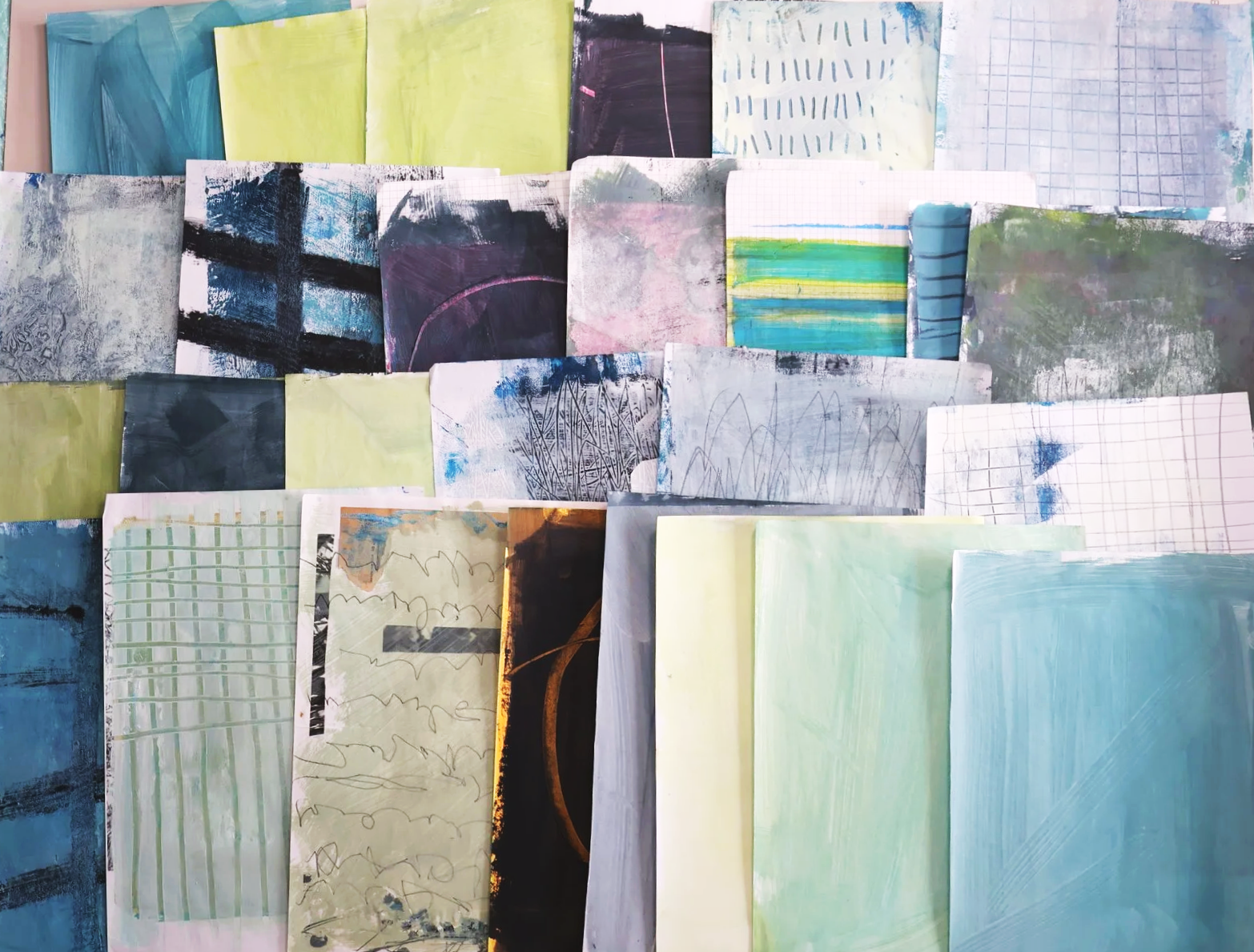
If you’ve been following along recently, you’ll know I’ve been making lots of collage papers inspired by a winter colour palette. That palette came from a December visit to our allotment garden.
In an earlier video, I shared how I gathered that inspiration and began building a stack of papers from it. This time, I wanted to take things a step further.
The palette stayed the same.
The energy changed.
Bringing the Allotment Home
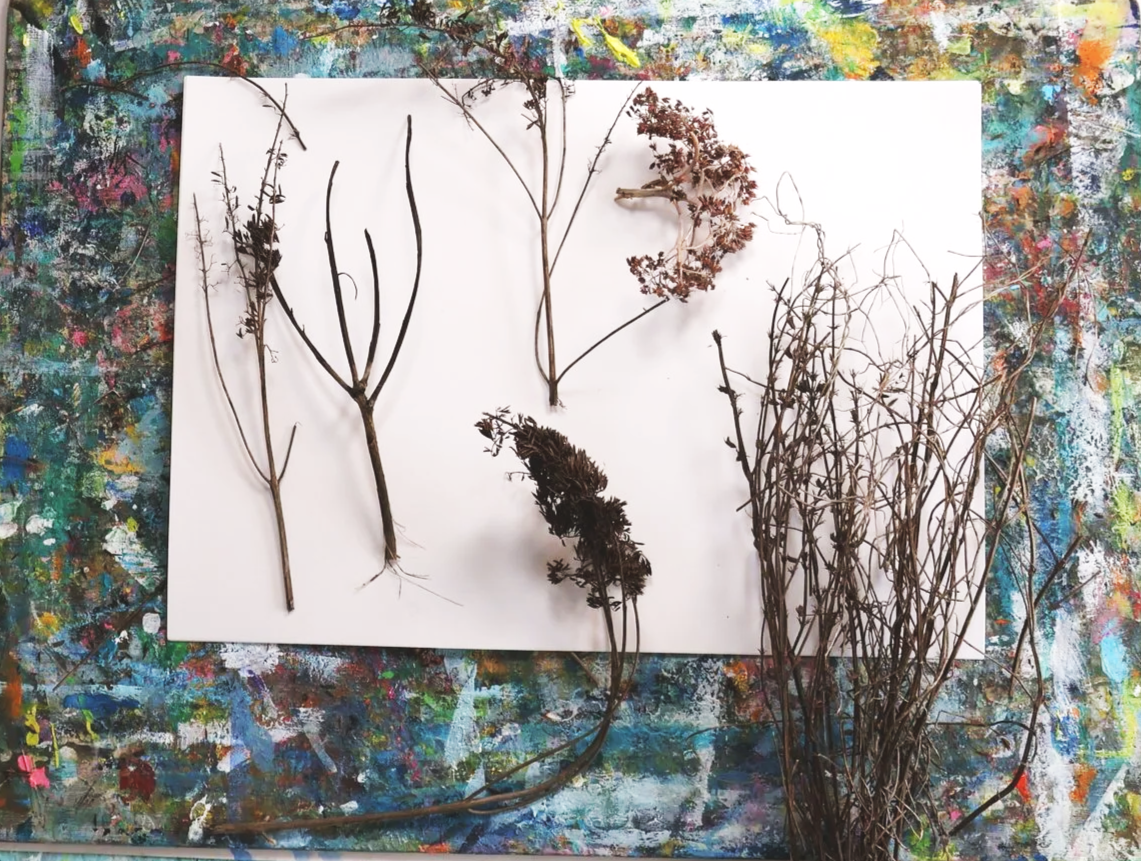
When I visited the allotment, I brought home more than just photos and colour inspiration. I gathered dried twigs, grasses and seed heads without knowing what I would do with them.
That’s often how it starts for me.
I don’t always have a plan. I collect things that feel interesting.
When I got home, I wondered whether those sticks and twigs might work as brushes. They had such beautiful lines and shapes already. Surely dipped in ink or paint they would create marks I couldn’t make with an ordinary brush.
And yes, I do slightly regret throwing them away afterwards. They made incredible textures. I should have kept them.
Keeping a Harmonious Stash
Before I started, I sorted through the collage papers I’d already made using the winter palette.
I divided them into two groups:
Papers I was happy to leave as they were
Papers I could push further
When I come to use them in collage later, I’ll have a mix. Some quieter pieces, some energetic ones, but all from the same base palette. They will naturally work together.
This is something I return to often. If your starting colours are cohesive, you can experiment freely on top without losing harmony.
When It Doesn’t Work at First
I began with acrylic ink, thinking its fluidity would work well with the twigs.
It didn’t. Not really.
The seed heads fell apart. The marks were faint. It felt awkward.
This is the point where it’s easy to stop. To think, why am I bothering?
But this is the work. This is the process.
You’re not trying to make a finished piece. You’re exploring. Testing. Seeing what happens.
So I carried on.
Finding the Marks
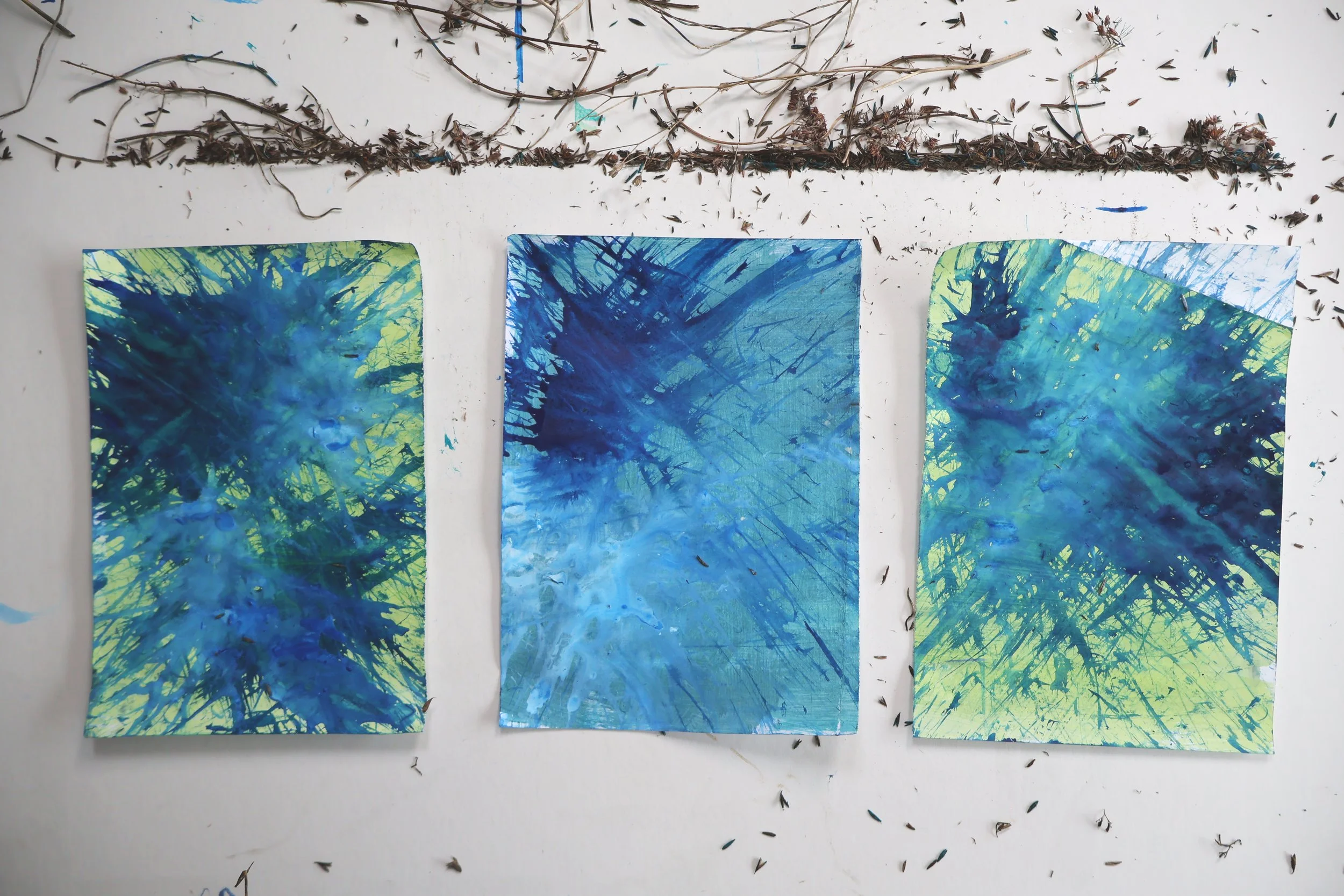
Eventually, I picked up a twig shaped almost like a claw and dragged it through the ink. Suddenly there was energy. Lines. Movement.
That small shift gave me momentum.
Then I moved to black ink against the pale winter backgrounds. I used bundled grasses, scrunching and pressing them into the surface. They scratched into the wet ink in the most beautiful way.
White ink over blue.
Dragging. Scratching. Smudging.
Each tool led to another question.
What if I tried this one in white?
What if I layered it over a different paper?
What happens if I press harder or softer?
And so you move from page to page, following curiosity.
Letting Go of the Outcome
At no point did I know what these papers would become.
I still don’t.
The goal wasn’t to make “good” papers. It wasn’t to create something impressive.
I was simply trying to create marks I couldn’t make with a normal brush. To introduce energy. To let the materials lead.
There’s no judgement in that space. Just experimentation.
If I did this again, the results would be completely different. I might use watered down acrylic, thicker paint, even scratch into heavier layers. The possibilities are endless.
That’s the beauty of it.
If you try this, don’t feel you need to use the same materials or colours I did. Choose what feels right for you. This is about process, not replication.
The Finished Papers
The final papers are full of movement and texture that I simply couldn’t have achieved any other way. They feel alive.
More importantly, I enjoyed making them.
If you’re heading out for a walk, perhaps gather a few sticks or grasses and see what they can do. You don’t need a plan. You don’t need a project in mind.
Just make the marks.
The outcome can come later.
If you enjoyed this and you’d like more thoughts on process, art journalling and working intuitively with what you have, you’re very welcome to join my newsletter. I share behind-the-scenes glimpses from my kitchen table studio, new videos, and reflections on making without pressure. You can sign up below and I’ll write to you soon.